Equal Billing Project Part 3

OVERVIEW

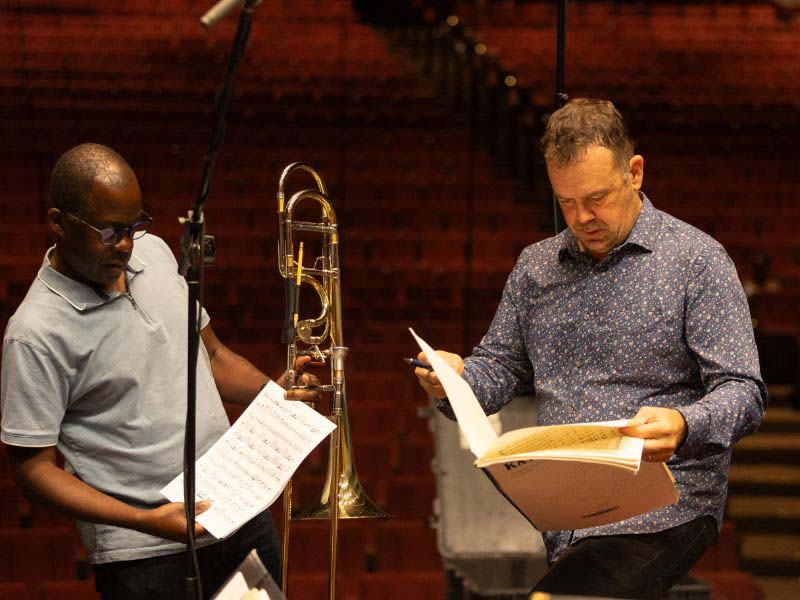
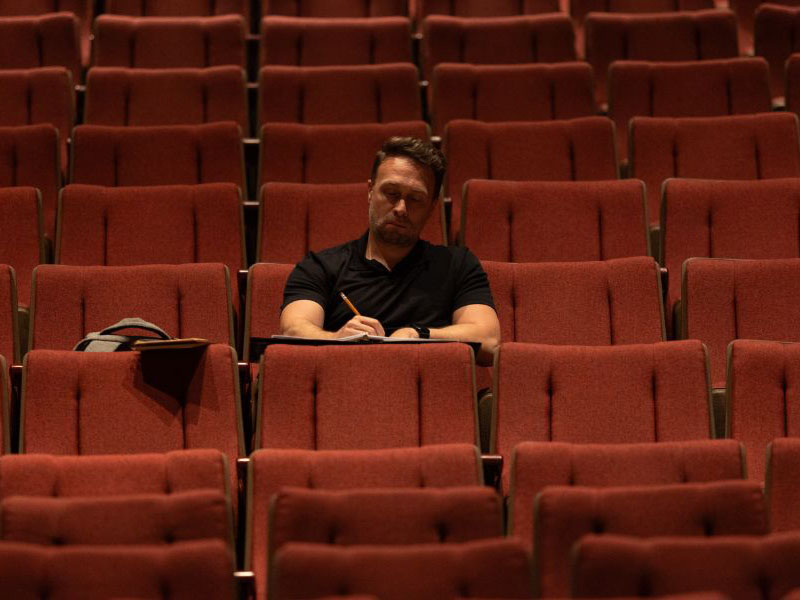
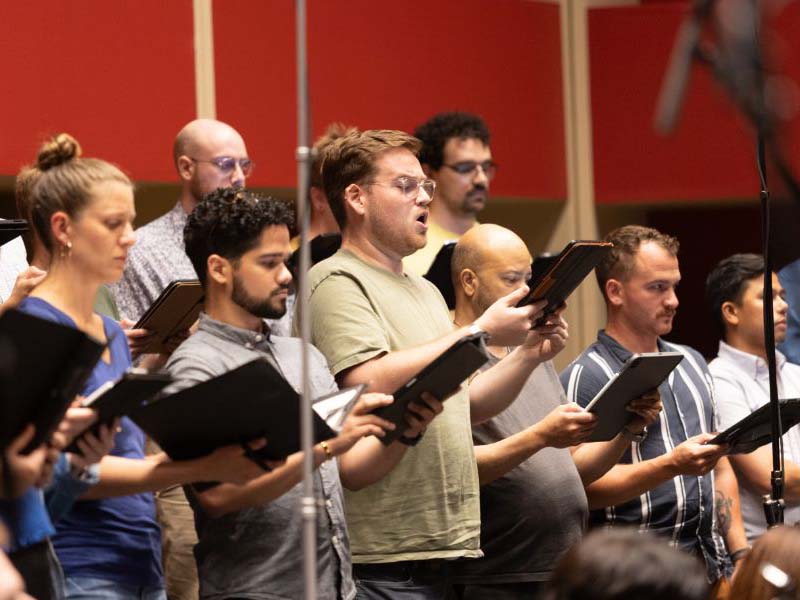
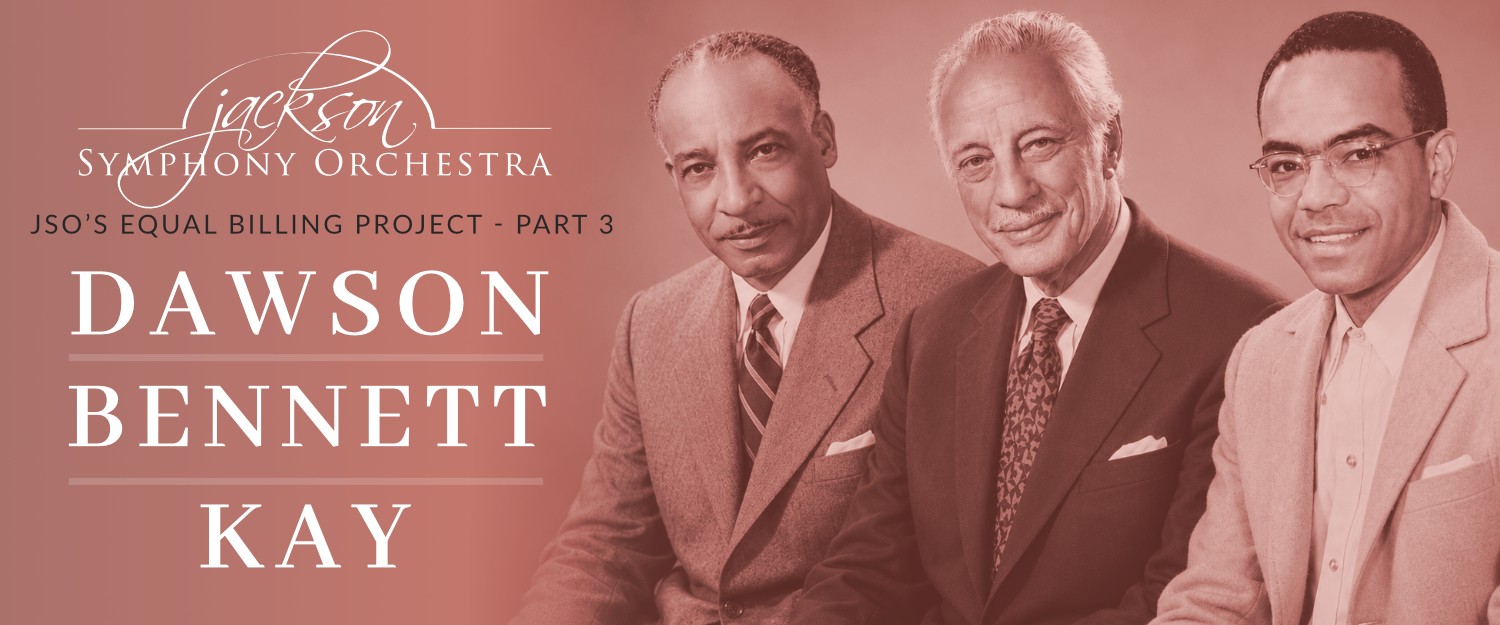
In its third round of the Equal Billing Project, the Jackson Symphony Orchestra will record works by American composers William Dawson, Ulysses Kay, and Robert Russell Bennett. Under the leadership of Matthew Aubin and joined by Vox GR choir, the project will highlight remarkable works that have been rarely performed and deserve greater recognition.
MATERIAL

William Dawson – Adagietto

Read the Program Notes

William Levi Dawson (1899–1990) is best known today for his Negro Folk Symphony, but throughout his career he composed a wide range of choral, orchestral, and chamber works. Adagietto reflects Dawson’s lyrical writing style, marked by rich harmonies and expressive orchestral textures. Though less frequently performed than his better-known compositions, the work demonstrates the craftsmanship and melodic warmth that characterize much of Dawson’s music and offers a glimpse into his broader output beyond his celebrated symphony.

William Dawson – Break, Break, Break <1928>

Read the Program Notes

William Dawson’s Break, Break, Break is a setting of Alfred, Lord Tennyson’s poem of the same name, exploring themes of grief, loss, and the passage of time. Written for mixed chorus with tenor and bass soloists, organ, piano, and orchestra, the work remained unpublished for many years and survives in Dawson’s handwritten manuscript.
The score begins Grave and alternates between slow and faster sections, employing canonic vocal writing, carefully detailed dynamics, and expressive tempo changes. At its central key change, Dawson marks the chorus sotto voce and instructs the singers to perform “in an undertone,” creating a striking moment of intimacy before the work builds again. Although the manuscript bears an opus number, no composition date appears, making its exact place within Dawson’s early career uncertain.

Poem: Break, Break, Break by Alfred, Lord Tennyson

Break, break, break,
On thy cold gray stones, O Sea!
And I would that my tongue could utter
The thoughts that arise in me.

O, well for the fisherman’s boy,
That he shouts with his sister at play!
O, well for the sailor lad,
That he sings in his boat on the bay!

And the stately ships go on
To their haven under the hill;
But O for the touch of a vanish’d hand,
And the sound of a voice that is still!

Break, break, break
At the foot of thy crags, O Sea!
But the tender grace of a day that is dead
Will never come back to me.

William Dawson – Out in the Fields <1929>

Read the Program Notes

Dawson’s setting of Louise Imogen Guiney’s poem Out in the Fields was published in 1929 by the Gamble-Hinged Music Company. The work bears the inscription, “In Memory of my Beloved Wife, Cornella,” honoring Dawson’s first wife, who died early in their marriage.

Scored for vocal soloist, mixed chorus, women’s chorus, and accompaniment by piano, orchestra, or wind ensemble, the composition reflects Dawson’s gift for expressive choral writing. While widely recognized for his arrangements of African American spirituals, Out in the Fields demonstrates his ability to bring the same emotional depth and sensitivity to secular poetry.

Poem: Out in the Fields by Louise Imogen Guiney

The little cares that fretted me,
I lost them yesterday
Among the fields above the sea,
Among the winds that play,
Among the lowing of the herd,
The rustling of the trees,
Among the singing of the birds,
The humming of the bees.
The foolish fears of what might pass
I cast them all away
Among the clover-scented grass,
Among the new-mown hay,
Among the hushing of the corn,
Where drowsy poppies nod,
Where ill thoughts die and good are born —
Out in the fields with God.

Ulysses Kay – Of New Horizons <1944>

Read the Program Notes

Warrant Officer Thor Johnson conducting the Stadium’s Army and Navy program, has furnished the following information about this composition:

“This new work by Mus. 2nd Cl. Lllysses Kay, of the United States Navy, is a vigorous, virile composition, optimistic in character. It plays about seven and three-quarters minutes. This is its first performance anywhere.

“It was written for me at my request for a premiere in mid-August with the National High School Orchestra at Interlochen, Michigan.

“The composer is a student of Paul Hindemith, besides having graduated from the Eastman School of Music, where he studied with Howard Hanson. I first met him at the Berkshire Music Center, where he spent two summers. Of the younger group of Negro composers he is certainly among the out-standing.”

Mus. 2nd Cl. Kay is at present stationed with the Negro Band at the Naval Air Base at Quonset Point, Rhode Island.

Ulysses Kay – Scene 1 from Danse Calinda <1941>

Read the Program Notes

Kay wrote the first scene of his ballet “Danse Calinda,” scored for theater orchestra and based on a story by Ridgeley Torrence, in 1941, while a student at the Eastman School of Music. It received its first performance by the Rochester Civic Orchestra, Kay’s composition teacher Howard Hanson conducting, on April 23, 1941. Kay later added a second scene.
He created the “Suite from the Ballet ‘Danse Calinda'” in 1947, and it won the Bobbit Gardner Award, Boston, for that year.

Ulysses Kay – Portrait Suite <1948>

Read the Program Notes

Born: Tucson, Arizona, January 7, 1917; now living in Englewood, New Jersey.

This work was composed in New York City during 1948. First performance to be given by the Erie Philharmonic Orchestra, James Sample Music Director, April 21 & 22, 1964.

The work is scored for 2 flutes (with piccolo), 2 oboes, 2 clarinets, 2 bassoons, 4 horns, 3 trumpets, 3 trombones, tuba, percussion, harp and strings.

Upon moving to New York City after World War II, I was impressed by seeing a good deal of art and sculpture that I had never seen before. I recall being especially excited by the work of Jacques Lipschitz, Henry Moore and Ivan Mestrovic. While their work nearly always depicted familiar subjects, it projected immense creative energies and rich imagination.
About this time I had been writing mostly orchestral and chamber music, using quite abstract materials. After seeing much of the sculpture mentioned above, I felt the urge to compose a piece in another vein from my work of that time. And my Portraits was the result.

The piece consists of five sections, designated as follows:

Prologue — Asymmetric
Reclining Figure
Blossoming — Epilogue
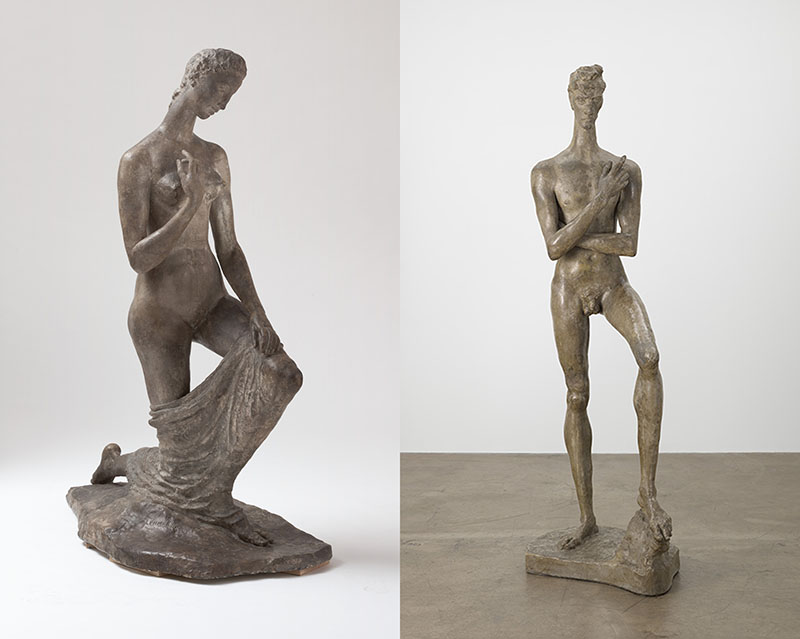

Kneeling Woman (1911) and Standing Youth (1913) by Wilhelm Lehmbruch
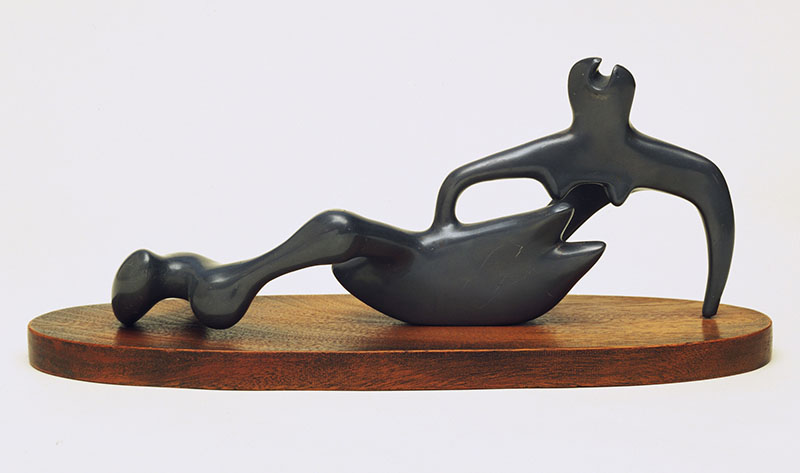

Reclining Figure by Henry Moore (1938)
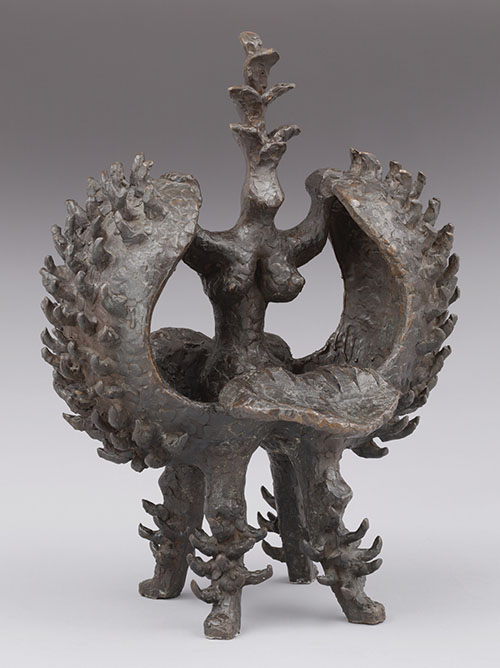

Blossoming by Jacques Lipchitz (1941-42)

Robert Russell Bennett – The Four Freedoms – A Symphony after Four Paintings by Norman Rockwell <1943>

Read the Program Notes

Missouri-born composer Robert Russell Bennett (1894-1981) helped shape the sound of American concert music while also becoming one of Broadway’s most influential orchestrators. He orchestrated landmark productions including Show Boat, Girl Crazy, Oklahoma!, and Annie Get Your Gun, while maintaining an extensive career as a composer of orchestral works.
Bennett composed The Four Freedoms in 1943 to support the U.S. war bond campaign inspired by Norman Rockwell’s famous paintings, themselves based on President Franklin D. Roosevelt’s 1941 State of the Union address. The symphony received its premiere that year by the NBC Symphony Orchestra at Radio City Music Hall in New York.

Structured in four movements – Freedom of Speech, Freedom of Worship, Freedom from Want, and Freedom from Fear – the work serves as a musical response to Rockwell’s paintings. Bennett draws on hymn-like melodies, popular American musical styles, and vivid orchestral colors to portray each of the four ideals, culminating in a powerful and optimistic finale celebrating resilience and hope.
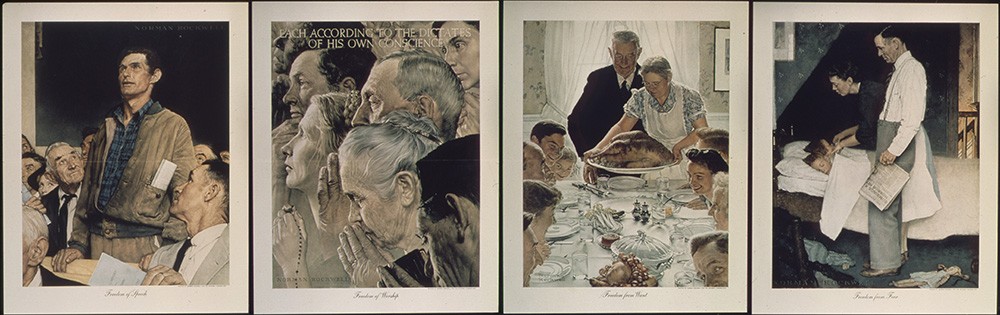

Freedom of Speech, Freedom of Worship, Freedom from Want, Freedom from Fear

PERSONNEL
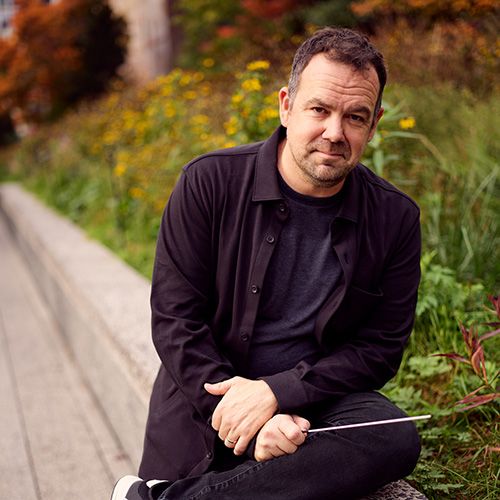
MATTHEW AUBIN
Conductor

A sought-after leader in today’s orchestral landscape, Dr. Matthew Aubin cultivates musical excellence through an innovative, community-minded, and inclusive approach.

Dr. Aubin currently serves as Music Director of the Jackson Symphony Orchestra, Music Director of the Southwest Michigan Symphony Orchestra, and Artistic Director of The Chelsea Symphony. In his role at TCS, he has led highly visible collaborations with partners such as actor John Lithgow, award-winning television series Mozart in the Jungle, and the American Museum of Natural History in New York City. Dr. Aubin has played a principal role in the initiation and development of The Chelsea Symphony’s annual competition for emerging composers with high profile adjudicators such as Conductor Laureate of the Seattle Symphony and music director of the All-Star Orchestra, Gerard Schwarz. Dr. Aubin has led TCS in their Lincoln Center debut and conducted the New York City premieres of works by Mark O’Connor, Fazil Say and Caroline Shaw, among others.
More
As a consultant for the Amazon Prime series Mozart in the Jungle created by Roman Coppola and Jason Schwartzman, Dr. Aubin was the off-camera conductor for an episode filmed on Rikers Island. Since then, Dr. Aubin has continued a relationship with the NYC Department of Correction, designing and conducting a series of concerts and education initiatives for detainees, both in person and online. He also served as the onstage conductor for the film Bel Canto with Julianne Moore and has been an artistic consultant for the hit television show Younger.

In his role as Music Director of the Jackson Symphony Orchestra, Dr. Aubin has transformed the orchestra’s visibility, both in the community and on a national scale. He has collaborated with world-renowned soloists such as pianist Pascal Rogé, harpsichordist Mahan Esfahani, cellist and composer Jeremy Crosmer, cellist Julian Schwarz, and composer Lowell Liebermann. During Dr. Aubin’s time as Music Director, the JSO’s season has expanded, and the organization is now regularly reaching audiences of all ages through expanded family concerts, education concerts, and the JSO’s Music on Tap series geared towards young adults. During the 2020 pandemic, he launched a series of digital initiatives, most notably the Random Acts of Music series. In 2022, he launched the Equal Billing Project, which records and supports the music of deceased composers who didn’t receive recognition or equal billing during their lifetime. Under Dr. Aubin’s leadership, the JSO also released a series of asynchronous, multimedia educational videos to be used in K-12 classrooms. These videos were based on the 2021 season’s virtual programming and explored musical concepts.

Dr. Aubin is the foremost scholar on the French composer Fernande Decruck. He has earned multiple research grants to study her significant life and work. In 2022, he was invited to be a panelist at the Fernande Decruck International Competition for Saxophone in France. A champion of the critical role of women in composition, Dr. Aubin is working to promote Decruck’s newly discovered lost music. He has edited and created critical editions of her work, which are published with the French publishing firm Éditions Billaudot, and has organized performances of Decruck’s music in the United States and abroad. To date, he has created two large-scale recordings alongside the Jackson Symphony Orchestra of Decruck’s orchestral works, with the first being released in 2022, and the second anticipated to be released in 2024. The first of their kind, these recordings are aimed at giving orchestras further access and insight into her brilliant work.

Dr. Aubin continues to be active as a freelance horn player, and regularly performs across the country. A devoted music educator, Dr. Aubin’s past associations include Assistant Professor of Music at Washington State University, Adjunct faculty at The Hartt School and Educational Programs Conductor for the Hartford Symphony Orchestra.

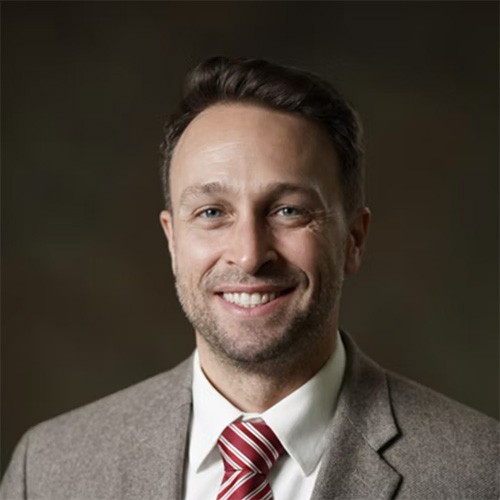
CHRISTOPHER MASON

Christopher Mason is the Founding Artistic Director of Vox GR and the Director of Choral Activities at the University of Minnesota Duluth where he directs the flagship University Singers and teaches secondary choral methods, conducting, and ear training. Previous academic appointments include Interim DCA at Southern Methodist University, DCA at Aquinas College, and Adjunct Professor at Grand Valley State University. Mason’s research focuses on the Latin American Baroque, specifically the analysis and historically informed performance of the music of Manuel de Sumaya, one of the first American-born boy choristers to become chapel master at the Cathedral of Mexico City in the 18th century.

More
Mason earned a D.M.A. in Choral Music at the University of Illinois Urbana-Champaign under the mentorship of Andrew Megill; a Master of Music in Conducting degree at the University of Georgia under the mentorship of Daniel Bara and J.D. Burnett; and a Bachelor of Music Education degree summa cum laude with a minor in mechanical engineering at Southern Methodist University in Dallas, TX.

In addition to various church and community choral ensembles, Mason has taught 6th–12th grade choral music and AP Music Theory just north of Dallas, in both Lovejoy and Plano Independent School Districts. High school choirs under his direction have sung at the Texas Music Educators Association Convention and with Dallas’ Orpheus Chamber Singers. He is a former Company Manager of the Santa Fe Desert Chorale, a recipient of Southern Methodist University’s 2014 Young Music Educator of the Year award, and a past director of the Dallas Men’s Rotary Chorus.

VOX GR

Vox GR, led by Artistic Director Dr. Christopher Mason, was formed in 2022 and is the premier professional choral ensemble in West Michigan. All of the ensemble’s members are professional singers who reside in Michigan. Vox GR performs a wide repertoire of choral music stretching across all eras from composers of diverse backgrounds.

SPONSORSHIP LEVELS & BENEFITS

$5,000 

  • Letter from the soloist
  • Option to meet the soloist
  • and all below

$2,500

  • Framed and signed commemorative poster
  • Option to meet with Maestro Matthew Aubin
  • and all below

$1,000

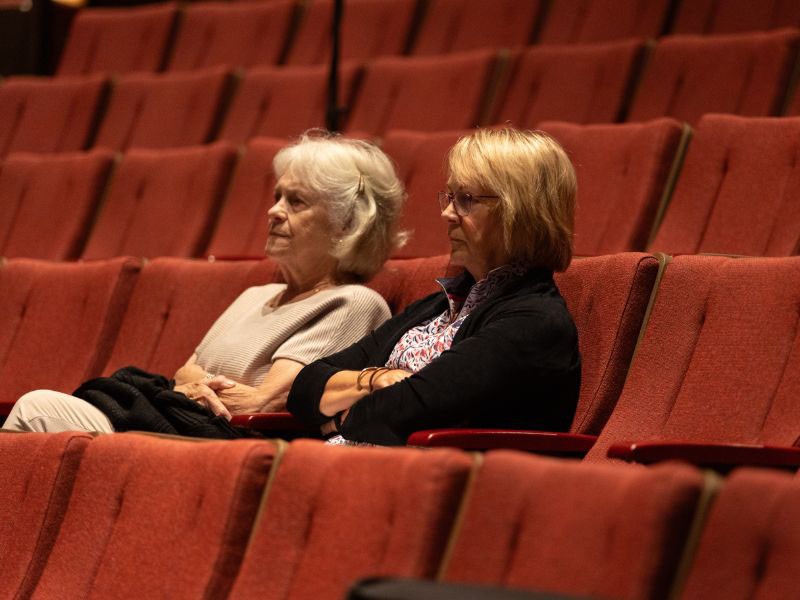
  • Invitation to view the recording session
  • and all below

$500

  • Name listed on CD booklet
  • Signed copy of the CD
  • Project Success reports and updates

SPONSORS

  • $50,000 – David and Patricia Eggert
  • $15,000 – Phil Curtis
  • $10,000 – Matthew and Michelle Aubin
  • $5,000 – Erin Mazur and Marco Shehab
  • $5,000 – Bill and Andrea Stickney
  • $1,500 – Greater Hartford Gives Larry Alan Smith Honorary Fund
  • $1,000 – Shaun S. Huang, M.D.